
Feeling our way home

Remember the old instruction on what to do when you’re lost?  I can recall my parents and grandparents reminding me as a child—stay where you are!  Don’t go searching frantically.  Keep your wits about you and stay calm.  Easier said than done, to be sure.  When agitated, anxious, restless, or out of sorts, staying with the discomfort is one thing, and mindfulness invites us to stay.  In the words of Pema Chodron from her book, The Places that Scare You, “whenever we wander off, we gently encourage ourselves to “stay” and settle down. are we experiencing restlessness? Stay!  Discursive mind? Stay! Aching knees and throbbing back? Stay! What’s for lunch? Stay! What am I doing here? Stay! I can’t stand this another minute! Stay! That is how we cultivate steadfastness.” 

Okay, so perhaps we can patiently meet ourselves and rest with uncertainty.  But “stay calm”?  That advice is as good as bubble gum to a roof caved in . . . useless.  Furthermore, “just relax” can frankly sound like pretty annoying direction.  Rather than helping us to chill, the critical mind runs the chance of further fraying our nerves.  Honestly, our nervous system isn’t too receptive to the intellect’s guidance to relax.  Period.  Our bodies already have this wisdom built in, and our biology knows how to return to balance.  This requires the intellect to get out of the way.  So, perhaps the nervous system could offer this wise retort to the rational brain: “be quiet”.  The body is the pillar of experience in coming back to baseline, after all.

Dr. Christiane Northrup, renowned women’s health expert, has said, “We have to give our bodies credit for their innate wisdom.  We don’t need to know exactly why something is happening in order to respond to it.  Understanding comes after you have allowed yourself to experience what you are feeling.  Healing is an organic process that happens in the body as well as the emotions.  The intellect is the last part that gets it.”  How’s that for embodied brilliance present in our personhood at every moment?

So, what might it be like to become a homebody?  To come into being in our own bodies?  To let go of habit and, instead, inhabit this home we live in?  Deeply honoring the body’s wisdom.  The good news is that being willing to ask the questions doesn’t then bind us to having to provide the answer.  As Rilke has said, “Don’t search for answers, which could not be given to you now . . .”  It’s really through inquiry and deep listening we can open to the body’s wisdom.  Pema Chodron goes on to say, “Nothing ever goes away until it has taught us what we need to know.”  Wise guidance and sage advice, indeed.  So, why not turn inward, inviting yourself to stay awhile, even welcoming lived experience to sit for tea to learn from what it has to teach.  Who knows?  We may even enjoy our own company.
How to Grow a Habit

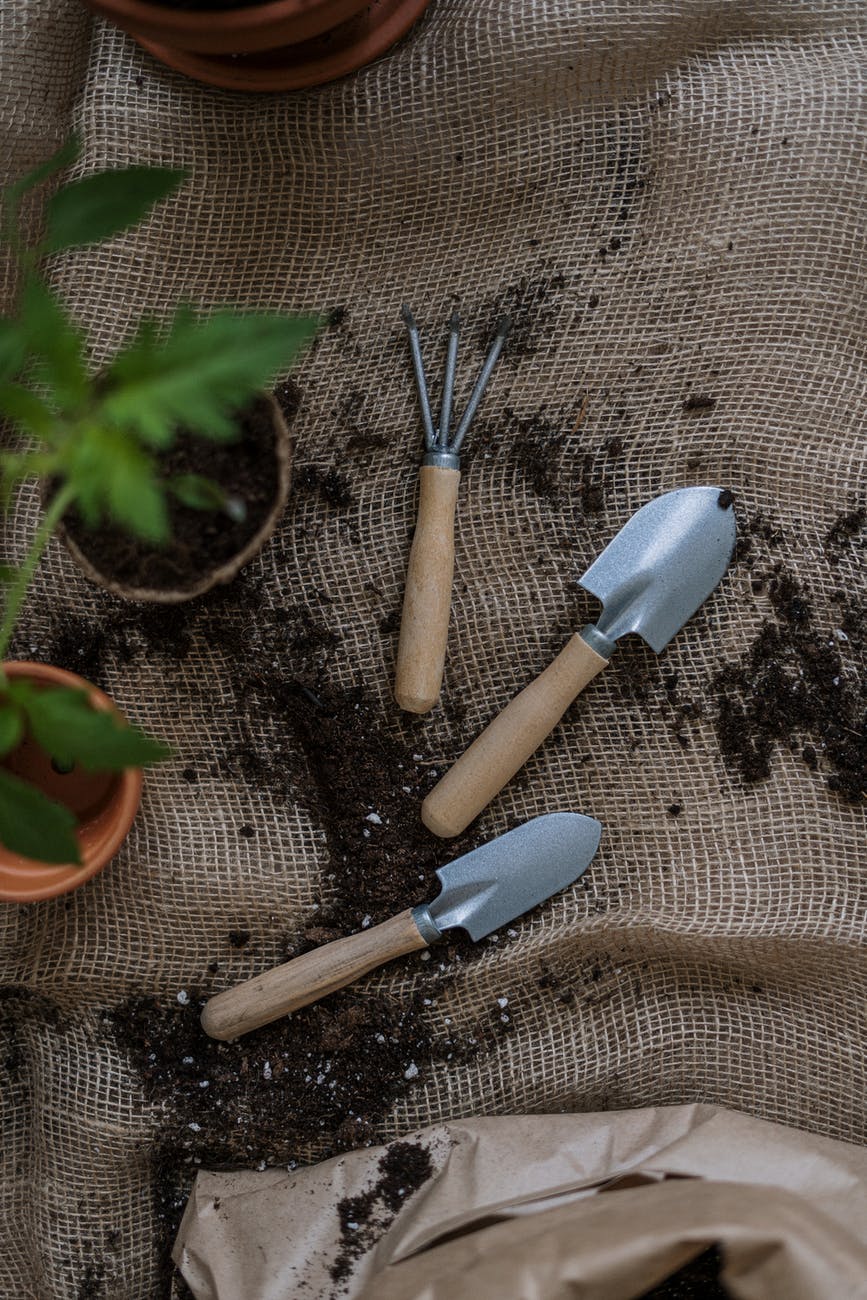
The new year can bring new ambitions.  We all know that motivation and inspiration can launch any new aspiration, but the staying power in any new habit depends on routine.  At the outset of a new year, developing self-care routines might begin with resolutions such as practicing mindfulness meditation during the week, taking reflective walks at lunchtime, or engaging in some intentional movement throughout the day.  But starting a new habit might sound like a mixed bag:  the “starting” part eliciting dread and the “new habit” perhaps evoking hope.  The good news is that the key is in starting smart.  Consider starting off by planting the seed of intention and cultivating the best conditions for your habit to grow.  New habits can take root once the obstacles around them are removed, right?  It’s just like pulling weeds.  And while starting off can be the hardest part, the tips offered here are aimed at simplicity.  Consider the following simple suggestions for helping a new habit take root:

Time:  Set a time.  Routine loves, well, routine.  So, aim for the same time each day to create predictability.  While you’re at it, put it in your calendar.  Set an alert or an alarm.  Hey, why not set both?  Schedule it like every other priority in your life because it is one.

Duration:  Decide how long.  Start small.  Keep standards manageable enough to reasonably achieve.  Want to practice every day for 20 minutes?  Aim for 10.  You’ll be motivated to continue for longer durations if you have the time to go further.  If you find that you don’t have the time at the outset, you’re not likely to get started, so give yourself permission to trim expectations.  Every minute counts.

Space:  Dedicate a space.  Okay, so you don’t have a whole room or an entire floor to devote to your new habit.  No Zen Den, She Shed or Man Cave?  No need.  Pick a corner of a room or an area where you can set up your space.  Have your supplies and props there ready for you.  Creating a physical space helps to manifest the psychic space for your intentions. 

Visual cue:  Gather your stuff and place your prop(s) within view.  If you can see it, you can be it—and you cannot ignore it.  Want to start doing yoga?  Place your mat where you’ll see it often.  Think of it as visually tripping over your habit.  If you must go around or over your mat to do other things, your mat will serve as a visual bell, reminding you to practice.  And remember, you don’t NEED anything to start a new habit beyond intention.  You can still take a movement break even if the dog chewed your mat.  You can still sit for meditation even if you spilled coffee of your special cushion.  Use a chair.  Let go of perceived problems to find those possibilities.

Connect to habit:  We are largely creatures of habit.  Good and bad judgements about our habits aside, connect a new habit to one you already have.  Look to self-care routines (hygiene, nutrition, hydration, rest, connection.)  Think of the routine tasks you do daily:  brushing teeth, showering, making coffee, letting the dog out, checking in with loved ones, the list goes on.  Insert your new habit into the chain of routine habits you already have.  Consider sitting to practice meditation while the coffee brews or after you eat lunch.  

Be willing to revise:  Let go of perfection NOW.  Perfect is just an idea anyhow.  Set your intentions for optimal time, duration, and space.  Have your props available.  And when everything falls through, just do your best to approximate to your intention. Only have 8 minutes instead of 10 since you hit snooze again?  Get up and go for 8 minutes then.  Pulled a hammy and can’t sit for meditation?  Lay down and practice.  Forgot to roll out your mat before lunch and take that movement break?  Do it the moment you remember, even if your mat is at home and you’re at work.  You truly don’t need stuff to practice a new habit.  All you need is to remember.  And, look, you’ve got all these reminders now.  Replace obstacles with opportunities.  Seriously, see those breaks in the clouds and look past, around and through those hindrances.  Soon enough, you’ll be sprinkling self-care into your day in the form of new habits like it’s your birthright.  Enjoy the treat!